Small Dogs, Big Myths: Rethinking Behaviour, Bite Risk and Muzzle Training
Why "small dog syndrome" is a myth worth retiring, and how muzzle training benefits every dog, whatever their size.
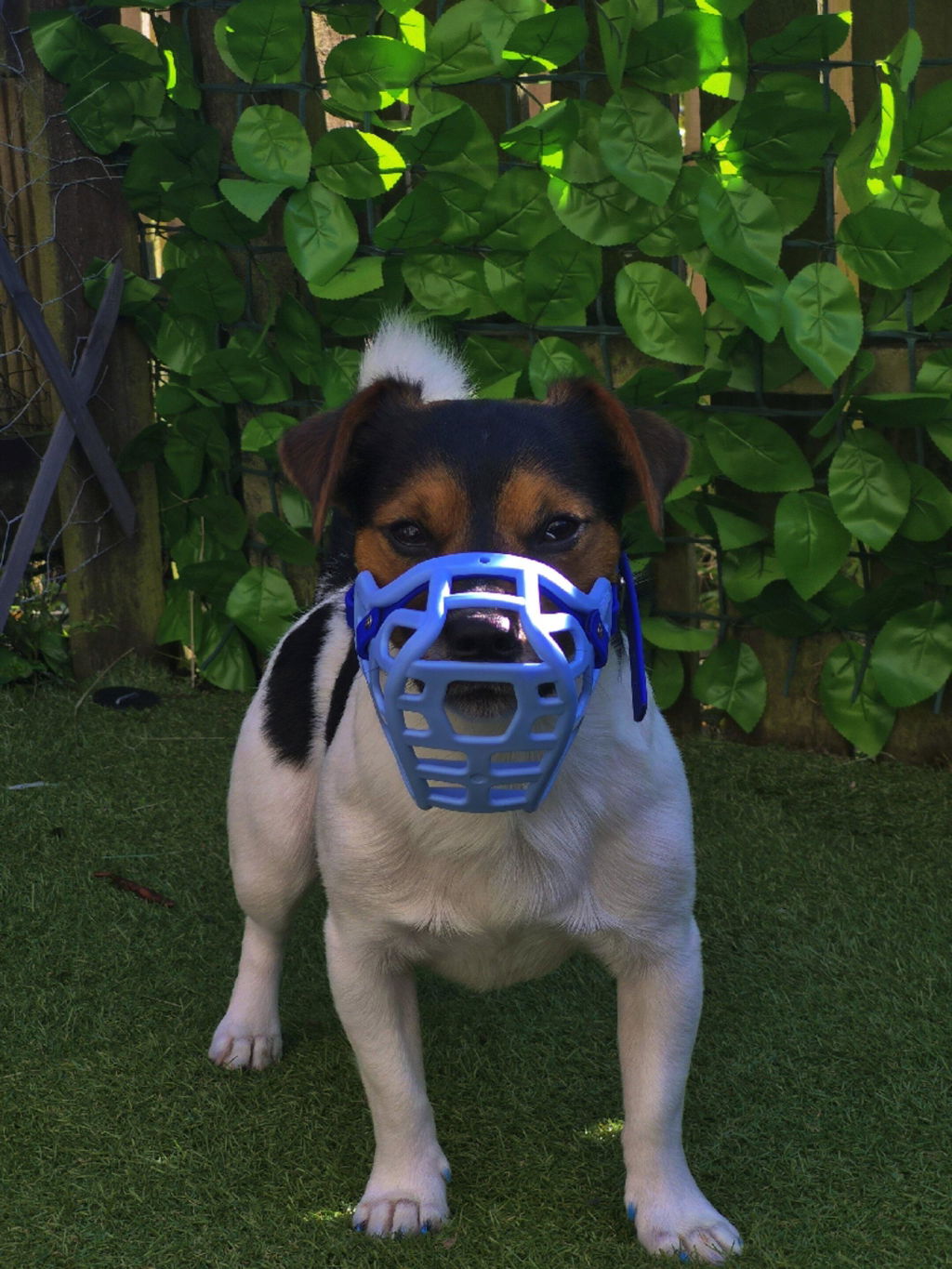
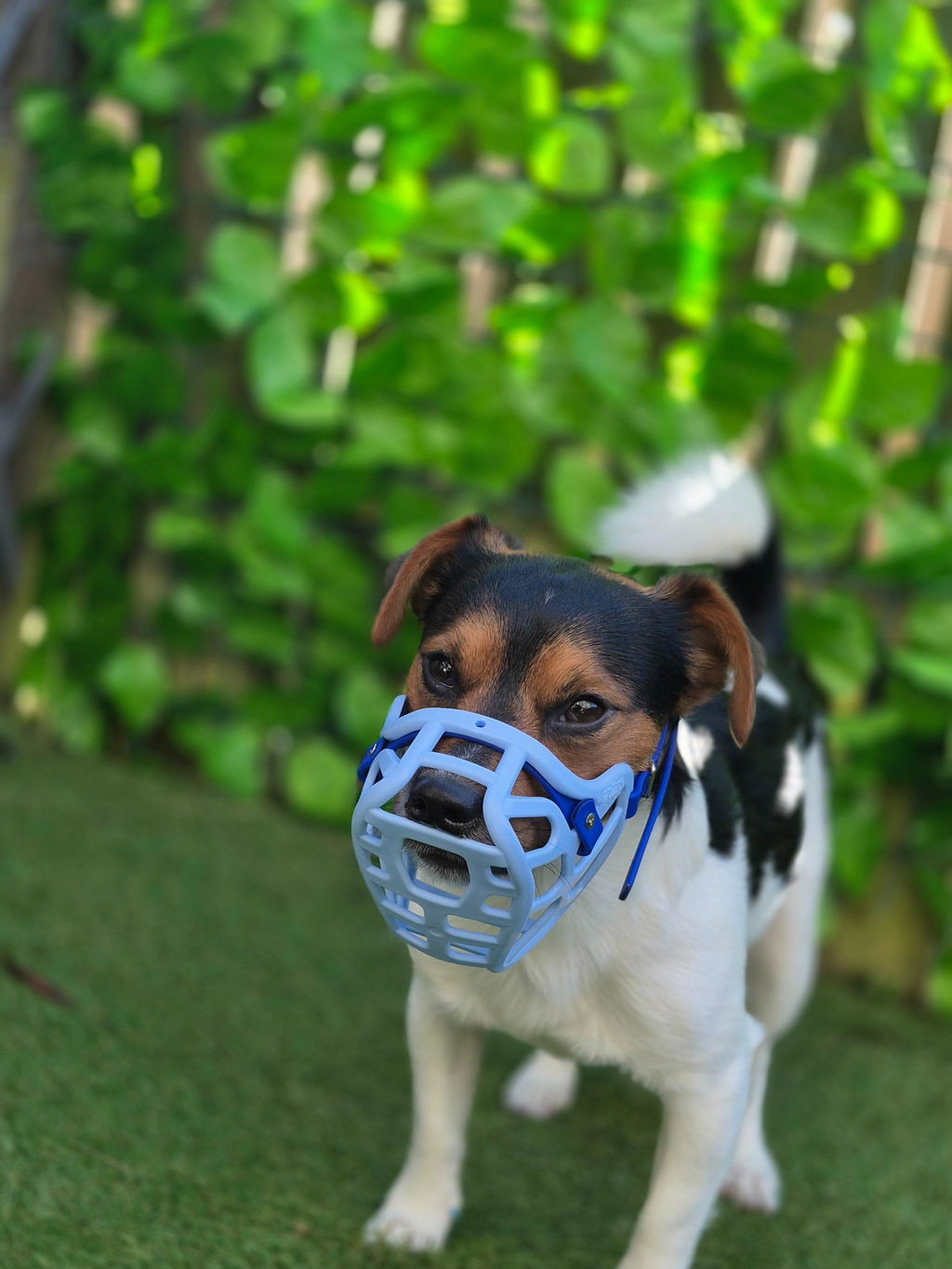
Muzzles have no breed, and no size. Positive muzzle training benefits small dogs just as much as large ones.
If you know anything about us here at The Muzzle Movement, you know how passionate we are about destigmatising and debunking myths around dog muzzles. We also know that muzzles have no breed. During conversations surrounding the XL Bully ban, several comments appeared repeatedly across social media, along the lines of: "It's not the big dogs that need muzzling, it's the little snappy Chihuahuas."
It usually came from people defending larger breeds against unfair assumptions. And rightly so, judging any dog purely by its breed or appearance isn't helpful, and most of us now recognise that behaviour is far more complex than that.
At the same time, these conversations highlighted something we perhaps don't think about often enough: while attitudes towards larger breeds are gradually becoming more nuanced, many of the same stereotypes still exist for small dogs.
They're labelled "ankle biters", "rats", "yappy little things" or simply "badly behaved". Their growls are laughed at, their barking is dismissed, and because they're small, they're often not afforded the same understanding we increasingly encourage for larger dogs.
The truth is that behaviour isn't determined by size. Whether a dog weighs 3kg or 50kg, understanding why they're behaving the way they are will always tell us far more than their breed or height ever could.
Behaviour Doesn't Happen by Chance
No dog is born "naughty" or "aggressive". Behaviour develops through a combination of genetics, learning, health, environment, previous experiences and the situations a dog finds themselves in throughout life. Breed history is an important part of that picture too.
For hundreds of years, humans selectively bred dogs not just for how they looked, but for the jobs they performed. As a result, many breeds still retain behavioural tendencies that helped them carry out those roles (Serpell & Duffy, 2014).
Take terriers, for example, many of our most popular small breeds belong to this group. Terriers were bred to locate, chase and dispatch vermin, so determination, persistence, prey drive and the motivation to grab and hold were all traits people actively selected for. Those instincts haven't disappeared simply because many terriers now spend their evenings curled up on the sofa.
The same is true of several small herding breeds. Pembroke Welsh Corgis, Cardigan Welsh Corgis and Lancashire Heelers may be short in stature, but they were developed to move cattle by nipping at their heels before quickly getting out of the way. It's hardly surprising that some individuals still enjoy chasing moving feet, bicycles or running children.
Of course, breed tendencies are only one piece of the puzzle. Every dog is an individual, and genetics are just one influence on behaviour. Understanding what our dogs were originally bred to do doesn't excuse unwanted behaviour, but it does help us understand where it comes from, so we can respond with appropriate training, management and enrichment.
The World Looks Different From Six Inches Off the Ground
It's easy to forget that a small dog experiences the world very differently to a Labrador or a German Shepherd. Almost everything is bigger than they are. People naturally lean over them, children rush towards them, unfamiliar dogs can seem enormous, and because they're easy to pick up, they often have far less control over their own space than larger dogs.
Most people do these things with the very best intentions. Picking up a small dog may seem helpful, and bending down to say hello is simply human nature. But it's worth remembering that what feels friendly to us isn't always experienced the same way by the dog.
Dogs naturally try to increase distance from things that make them uncomfortable before they resort to more obvious behaviours. Dr Karen Overall describes distance as one of a dog's primary coping strategies (Overall, 2013). If moving away isn't possible, or if their subtle communication is repeatedly overlooked, they may begin barking, growling or snapping instead.
This is something many small dogs experience. Because their behaviour is less intimidating, it's often dismissed as funny or described as "small dog syndrome", when in reality the dog may simply be asking for a little more space.
Listening to those early signals, whatever size the dog, is one of the simplest ways we can help prevent situations from escalating.
So, Do Small Dogs Bite More?
This is one of those questions where the science gives a more interesting answer than a simple yes or no.
One of the largest studies investigating breed-related behaviour found that some smaller breeds scored more highly for aggression towards their guardians and unfamiliar people than many larger breeds (Duffy, Hsu & Serpell, 2008). However, aggression is a broad behavioural term. It describes behaviours intended to increase distance from something the dog finds uncomfortable, it doesn't necessarily mean a dog bites, and it certainly doesn't mean every dog of that breed behaves the same way.
Another study found that smaller dogs were more likely to display behaviours such as fearfulness, excitability and aggression, but also highlighted that differences in training methods, consistency of handling and guardian engagement appeared to play an important role (Arhant, Troxler & Beetz, 2010).
In other words, the picture is much more complicated than "small dogs are naturally aggressive". Genetics matter, but so do learning, environment, health, handling and life experiences.
At the same time, larger dogs are capable of generating much greater bite force, meaning bites from larger dogs are more likely to result in serious injuries requiring hospital treatment.
These findings aren't contradictory. Small dogs may display aggressive behaviour more frequently in certain situations, while larger dogs are more likely to cause severe injury if they do bite. Neither finding supports the idea that one group of dogs is inherently "better" or "worse" than the other.
Small Bites Still Matter
One misconception that occasionally surfaces is that bites from small dogs don't really count because the injuries are less severe.
While it's true that larger dogs can inflict more serious physical injuries, small dogs are still capable of puncturing skin, causing painful injuries to hands and fingers, introducing infection and leaving lasting emotional impacts, particularly for children or people who already feel nervous around dogs.
Dog bites are also far more common than many people realise. A UK community study estimated that almost one in four people reported having been bitten by a dog during their lifetime, yet only around one third of those bites required medical treatment (Westgarth et al., 2018). Many bites therefore never appear in hospital statistics at all.
Rather than asking whether a dog is capable of causing catastrophic injury, perhaps the better question is how we can prevent bites from happening in the first place. Understanding behaviour, recognising early signs of discomfort and supporting dogs before they feel the need to bite benefits everyone involved.
Where Do Muzzles Fit Into All of This?
The reasons a dog may benefit from being comfortable wearing a muzzle have very little to do with their size.
A small dog may need a muzzle while recovering from surgery, because they're in pain, during veterinary treatment, at the groomers, while working through behaviour modification with a qualified professional, or simply because they have a habit of scavenging things that could make them seriously ill.
These are exactly the same reasons many larger dogs wear muzzles.
Positive muzzle training allows dogs to become comfortable wearing a muzzle long before they actually need one. If an emergency arises or circumstances change, the muzzle itself isn't another unfamiliar or frightening experience.
That's why we encourage guardians to think of muzzle training as a life skill rather than a last resort. A well-fitted muzzle is simply another piece of safety equipment that can help protect the dog, the people around them and the professionals caring for them if life doesn't go according to plan.
Looking Beyond the Labels
The more we learn about canine behaviour, the clearer one thing becomes: size tells us surprisingly little.
A Chihuahua isn't automatically "snappy", just as a German Shepherd isn't automatically dangerous. Every dog is an individual shaped by their genetics, experiences, health, environment and learning throughout life.
Moving away from stereotypes allows us to understand the dog in front of us rather than the label attached to them. It helps us recognise when they're feeling worried, frustrated or uncomfortable, and respond with kindness, empathy and evidence-based training.
Whether a dog weighs 2kg or 50kg, they deserve that same understanding. And when it comes to muzzle training, the message remains exactly the same: any dog can benefit from learning to wear a muzzle positively, just in case.
References
Arhant, C., Troxler, J. & Beetz, A. (2010). Behaviour of smaller and larger dogs: Effects of training methods, inconsistency of owner behaviour and level of engagement in activities with the dog. Applied Animal Behaviour Science, 123(3-4), 131-142.
Duffy, D. L., Hsu, Y. & Serpell, J. A. (2008). Breed differences in canine aggression. Applied Animal Behaviour Science, 114(3-4), 441-460.
Overall, K. L. (2013). Manual of Clinical Behavioral Medicine for Dogs and Cats. Elsevier.
Serpell, J. A. & Duffy, D. L. (2014). Dog Breeds and Their Behavior. In The Domestic Dog: Its Evolution, Behaviour and Interactions with People (2nd ed.). Cambridge University Press.
Westgarth, C. et al. (2018). Dog bites: A community study of prevalence, incidence and factors associated with dog bites in a UK community. Journal of Epidemiology & Community Health, 72, 331–336.