
Clearpay - Now Available for International Shoppers Clearpay - Now Available for International Shoppers
Muzzle orders placed now will ship within 10 DAYS, excluding pre-order sizes and ready to ship items..

🐾 Why Small Dogs Need Muzzles Too

(Small Dog Behaviour, Safety & Welfare Guide)

When people think about dog muzzles, they often picture large, powerful dogs. But this perception leaves a significant gap, not just in understanding, but in welfare. Small dogs have just as much need for appropriate, well-fitting muzzles, yet they’ve long been overlooked in both product design and public conversation.

With the launch of our first muzzle sizes designed specifically for smaller dogs, we want to shine a light on why this matters, grounded not just in experience, but in evidence.

One of the biggest challenges for small dog guardians is simply finding equipment that fits. The market has historically catered to medium and large breeds, leaving small dogs, especially those with varied head shapes, underserved. So many small dogs, with big needs, have had such limited options!

Small dogs aren’t just “scaled-down” versions of bigger dogs. From short, wide faces to longer, narrower snouts, these differences require entirely different muzzle shapes. Without this consideration, fit, comfort, and safety are compromised..

🦴 The Myth of the “Harmless” Small Dog

Small dogs are often not taken seriously when it comes to behaviour. Research shows they are frequently perceived as “more aggressive, excitable, anxious and fearful” than larger dogs (Arhant et al., 2010).

But this perception doesn’t exist in a vacuum, it’s influenced by how they are handled and trained.

📊 Smaller Size, Higher Risk: What the Research Shows

In fact, smaller size is consistently linked with increased fear and aggression-related behaviours.

Studies have found that as body size decreases, the likelihood of fearfulness and biting behaviour increases (Martínez et al., 2011; McGreevy et al., 2013).

🐕 Fear in Small Dogs: Misunderstood, Not Misbehaved

Small dogs are also more likely to show fear of strangers and other dogs (Puurunen et al., 2020).

This isn’t because small dogs are “worse” behaved, it’s because their needs are often misunderstood or unmet.

⚠️ When Behaviour Is Dismissed Instead of Respected

Many people will laugh at a growling Chihuahua or even harass or goad them even more, rather than respecting their boundaries and considering the behaviour as the dogs asking for space and potentially escalating to biting.

📉 Inconsistent Training and Its Impact on Behaviour

At the same time, small dogs are often trained and exercised less, and may receive less consistent behavioural guidance (Puurunen et al., 2020).

This combination of less engagement, more inconsistency, and inappropriate training methods, can exacerbate behavioural challenges..

⚖️When Autonomy Is Taken Away

Small dogs are far more likely to be physically managed by being picked up, restrained, or removed from situations, rather than supported through them.

While this may seem protective, it can actually increase stress and reduce a dog’s ability to cope. It also removes their autonomy and ability to communicate.

A muzzle offers an alternative. It allows a dog to remain in their environment, move freely, and be included if they are comfortable to do so, without escalating risk.

Instead of being physically restrained, they can safely work through their big feelings with appropriate positive training and environmental management.

🐕 Health & Welfare Factors in Small Dogs

Small dogs are also disproportionately affected by certain health issues, including dental disease and chronic pain conditions, which can influence behaviour and tolerance.
Black dog wearing a muzzle inside a Groomers bath

Additionally, research shows that smaller, lighter dogs are more likely to display fear responses to stimuli such as noise and unfamiliar objects (Stone et al., 2016), and that shorter dogs may show more defensive aggression (Stone et al., 2016).


Pain, fear, and stress all lower a dog’s threshold. In these contexts, a muzzle can make necessary care like veterinary treatment or grooming safer and less distressing if used alongside confidence building.

⚠️ Bite Risk and Misconceptions

There’s a common belief that small dogs pose less risk, but the reality is more nuanced.

Small dogs are actually overrepresented in certain bite statistics.

For example, lower body weight has been associated with increased likelihood of biting (Guy et al., 2001), and aggression directed toward humans has been found to increase as dog size decreases (Martínez et al., 2011).

Small dog sitting on grass with a blurred natural background

Some small breeds (such as Dachshunds and Chihuahuas) have been reported to show higher rates of serious aggression toward both owners and strangers (Duffy et al., 2008).

Importantly, bites from small dogs can still cause significant injury, particularly to young children.

In fact, smaller dogs have been associated with frequent and sometimes more severe bite patterns in children under five (Arhant et al., 2010).

At the same time, larger dogs are far more likely to be euthanised following aggression, highlighting a disparity in how risk is perceived and managed (Arhant et al., 2010).

✂️ When Do Small Dogs Need a Muzzle?

Small dogs are often placed in situations where a muzzle could make a meaningful difference but this is rarely considered.

Grooming: Small dogs are groomed far more frequently than many larger breeds. For dogs who are fearful, in pain, or sensitive to handling, a muzzle can reduce stress and risk for both the dog and the groomer. Remember, a muzzle shouldn’t be used to force a dog in a situation they are uncomfortable with and should be used alongside positive behaviour modification plans.

Veterinary care: Fearful or painful dogs may react defensively. A muzzle allows procedures to be carried out safely and more calmly for essential treatment or emergencies.

Travel and public transport: In many countries, muzzle laws apply to all dogs, regardless of size particularly on public transport. Small dogs are not exempt, and guardians need suitable options that actually fit when taking their dogs on holiday.

In these scenarios, a muzzle isn’t a last resort but it’s a proactive welfare tool.

🏥 Dog Muzzles as a Tool for Better Welfare for Small Dogs

Muzzles are not about restriction - they’re about enabling safer, more positive experiences..

Reduce pressure on guardians worried about keeping others safe

Allow dogs to stay in situations rather than being removed

Support training and behaviour modification

Enable necessary care without escalation

🧠 Muzzles as a Welfare Tool (Not a Last Resort)

Muzzles are not about restriction - they’re about enabling safer, more positive experiences.

📊 Reduce pressure on guardians

  • Reduce pressure on guardians worried about keeping others safe

🐕 Allow safer social exposure

  • Allow dogs to stay in situations rather than being removed

⚠️ Support behaviour modification

  • Support training and behaviour modification

📉 Enable necessary care

Enable necessary care without escalation

🛠️ Choosing the Right Muzzle for a Small Dog

Not all muzzles are suitable for small breeds.

🐾 A Good Muzzle for Small Dogs should:

A good muzzle for small dogs should:

• Allow panting and drinking

• Secure & Reliable Fit

• Beable to reward with treats

• Be lightweight and comfortable

Because small dogs have unique anatomy, standard designs often don’t workwhich is why breed-appropriate sizing matters.

sizing quiz

🐶 Designed Specifically for Small Dogs

The lack of suitable small dog muzzles has been a long-standing issue.

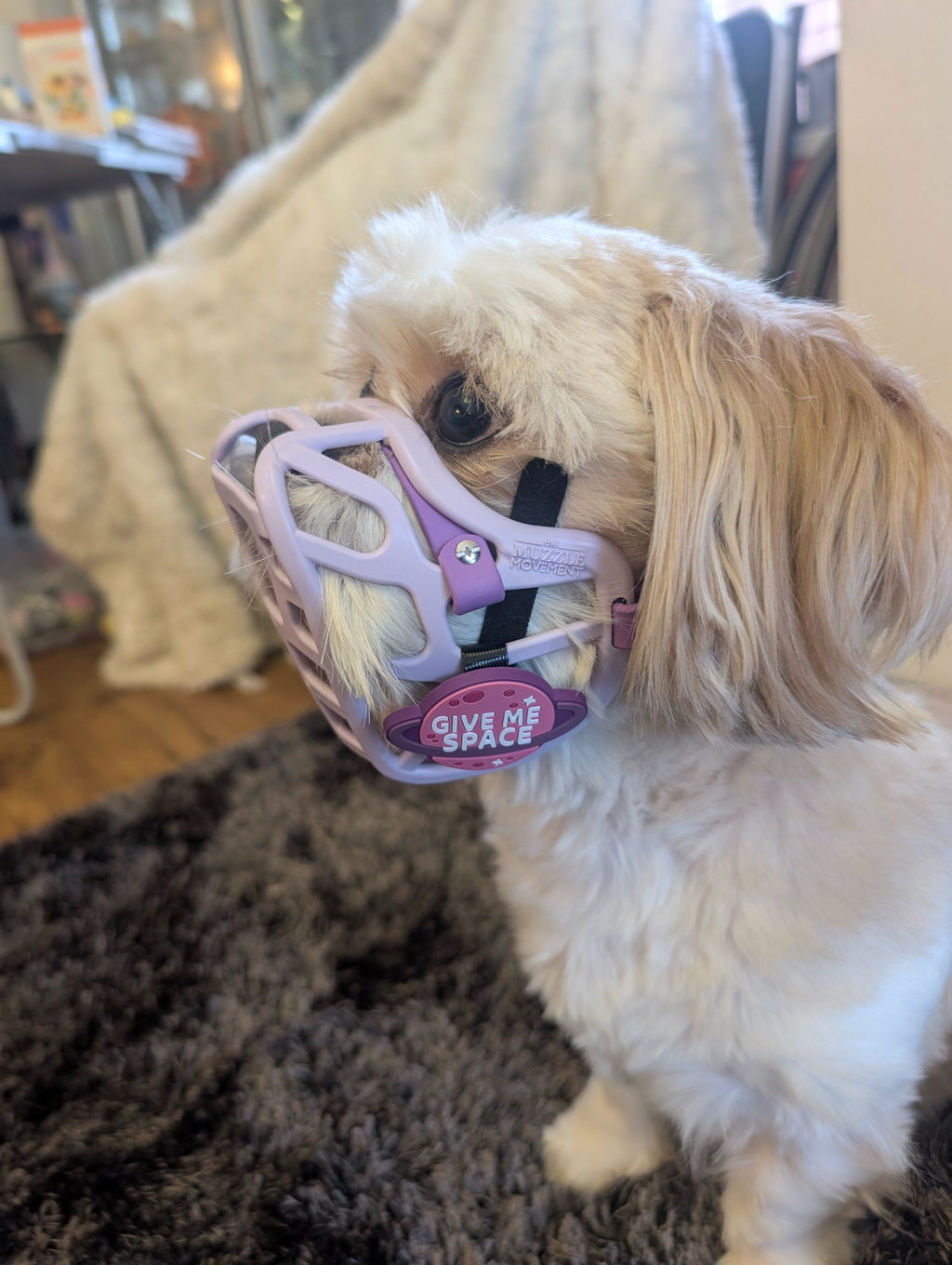
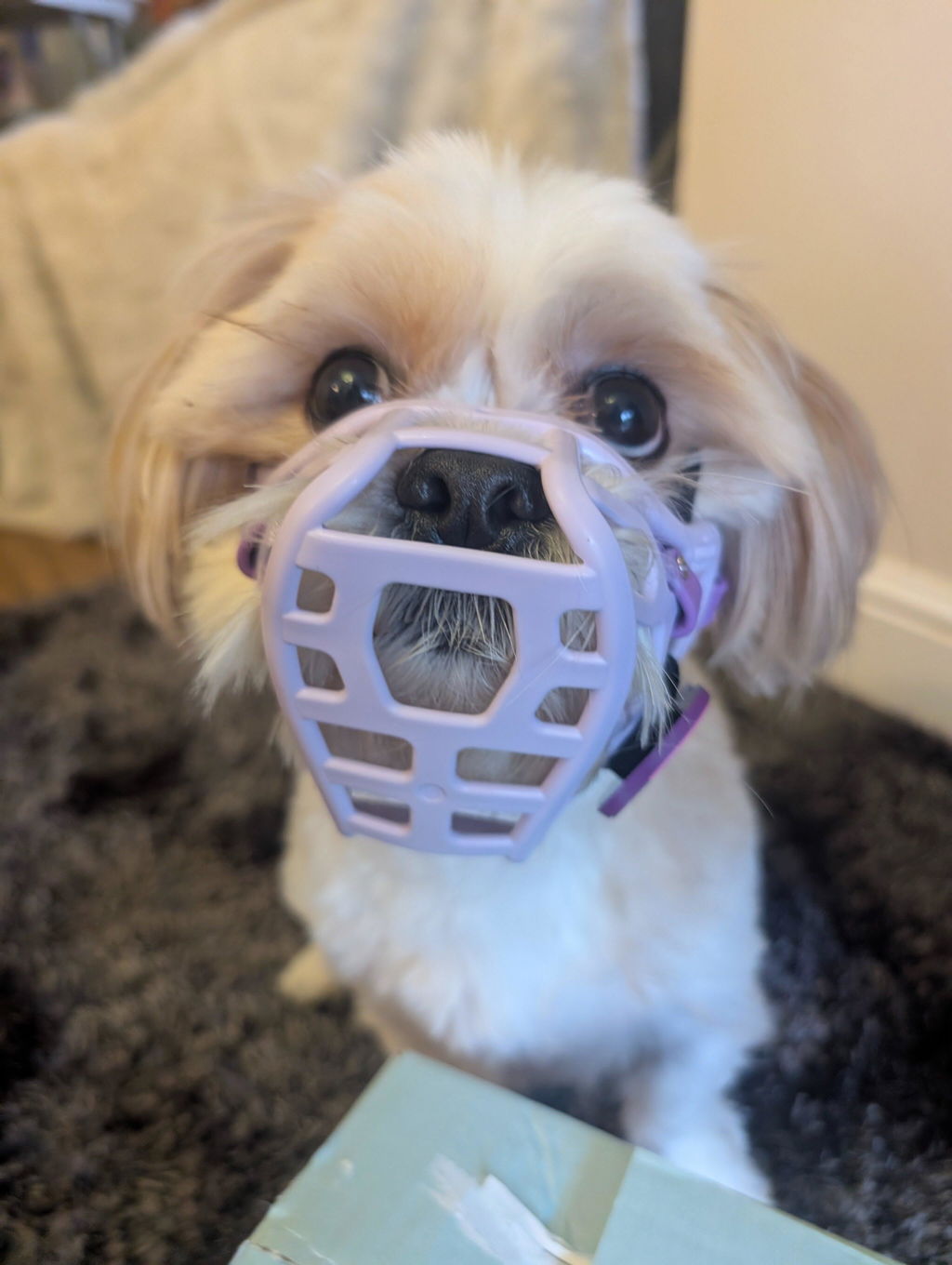
That’s why we’ve developed our first range of muzzles designed specifically for smaller dogs, taking into account:

• Varied head shapes

• Comfort and safety

• Real behavioural needs

Because every dog, regardless of size deserves:

• To feel safe

• To be understood

• To have access to appropriate equipment

SHOP SMALL SIZE Muzzles

🐕 How to Introduce a Muzzle to your Dog

A gentle, step-by-step guide to dog muzzle training.

We want our dogs to see their muzzles as something positive, safe, and enjoyable, just like their lead or treat cupboard!

We can build that same joyful association with the muzzle through reward-based muzzle training, pairing it with things your dog already loves, like treats, games, and playtime..

Does your dog get excited when you grab the lead or head toward the treat jar? 

That’s a positive association at work, your dog has learned that those cues mean something fun is coming.

READ MORE

❓ FAQs About Small Dog Muzzles

Do small dogs need muzzles?

Yes. Small dogs can experience fear, stress, and behavioural challenges just like larger dogs. A muzzle can support safety and training.

Are muzzles safe for small dogs?

When properly fitted and introduced positively, small dog muzzles are safe and humane.

Will a muzzle stop my small dog’s behaviour?

No. A muzzle is a management aid not a solution. It should be used alongside training and behaviour support.

Can small dogs wear muzzles on public transport?

Yes. In many places, muzzles are required regardless of dog size, so having a properly fitted option is essential.

MORE HELPFUL BLOGS
References 1. Arhant, C., Bubna-Littitz, H., Bartels, A., Futschik, A. and Troxler, J. (2010). Behaviour of smaller and larger dogs: Effects of training methods, inconsistency of owner behaviour and level of engagement in activities with the dog. Applied Animal Behaviour Science, 123(3–4), pp. 131–142. https://doi.org/10.1016/j.applanim.2010.01.003 2. Puurunen, J., Hakanen, E., Salonen, M., Mikkola, S., Sulkama, S., Araujo, C., Lohi, H. (2020). Inadequate socialisation, inactivity, and urban living environment are associated with social fearfulness in pet dogs. Scientific Reports, 10(1). https://doi.org/10.1038/s41598-020-60546-w 3. Guy, N.C., Luescher, U.A., Dohoo, S.E., Spangler, E., Miller, J.B., Dohoo, I.R. and Bate, L.A. (2001). Risk factors for dog bites to owners in a general veterinary caseload. Applied Animal Behaviour Science, 74(1), pp. 29–42. https://doi.org/10.1016/S0168-1591(01)00154-X 4. Overall, K.L. and Love, M. (2001). Dog bites to humans—demography, epidemiology, injury, and risk. Journal of the American Veterinary Medical Association, 218(12), pp. 1923–1934. 5. Duffy, D.L., Hsu, Y. and Serpell, J.A. (2008). Breed differences in canine aggression. Applied Animal Behaviour Science, 114(3–4), pp. 441–460. https://doi.org/10.1016/j.applanim.2008.04.006 6. Martínez, Á.G., Santamarina Pernas, G., Diéguez Casalta, F.J., Suárez Rey, M.L. and De la Cruz Palomino, L.F. (2011). Risk factors associated with behavioral problems in dogs. Journal of Veterinary Behavior, 6(4), pp. 225–231. https://doi.org/10.1016/j.jveb.2011.01.006 7. McGreevy, P.D., Georgevsky, D., Carrasco, J., Valenzuela, M., Duffy, D.L. and Serpell, J.A. (2013). Dog behavior co-varies with height, bodyweight and skull shape. PLOS ONE, 8(12). https://doi.org/10.1371/journal.pone.0080529 8. Stone, H.R., McGreevy, P.D., Starling, M.J. and Forkman, B. (2016). Associations between domestic-dog morphology and behaviour scores in the Dog Mentality Assessment. PLOS ONE, 11(2). https://doi.org/10.1371/journal.pone.0149403

What are you looking for?


 Muzzles  Leads  Snooties...