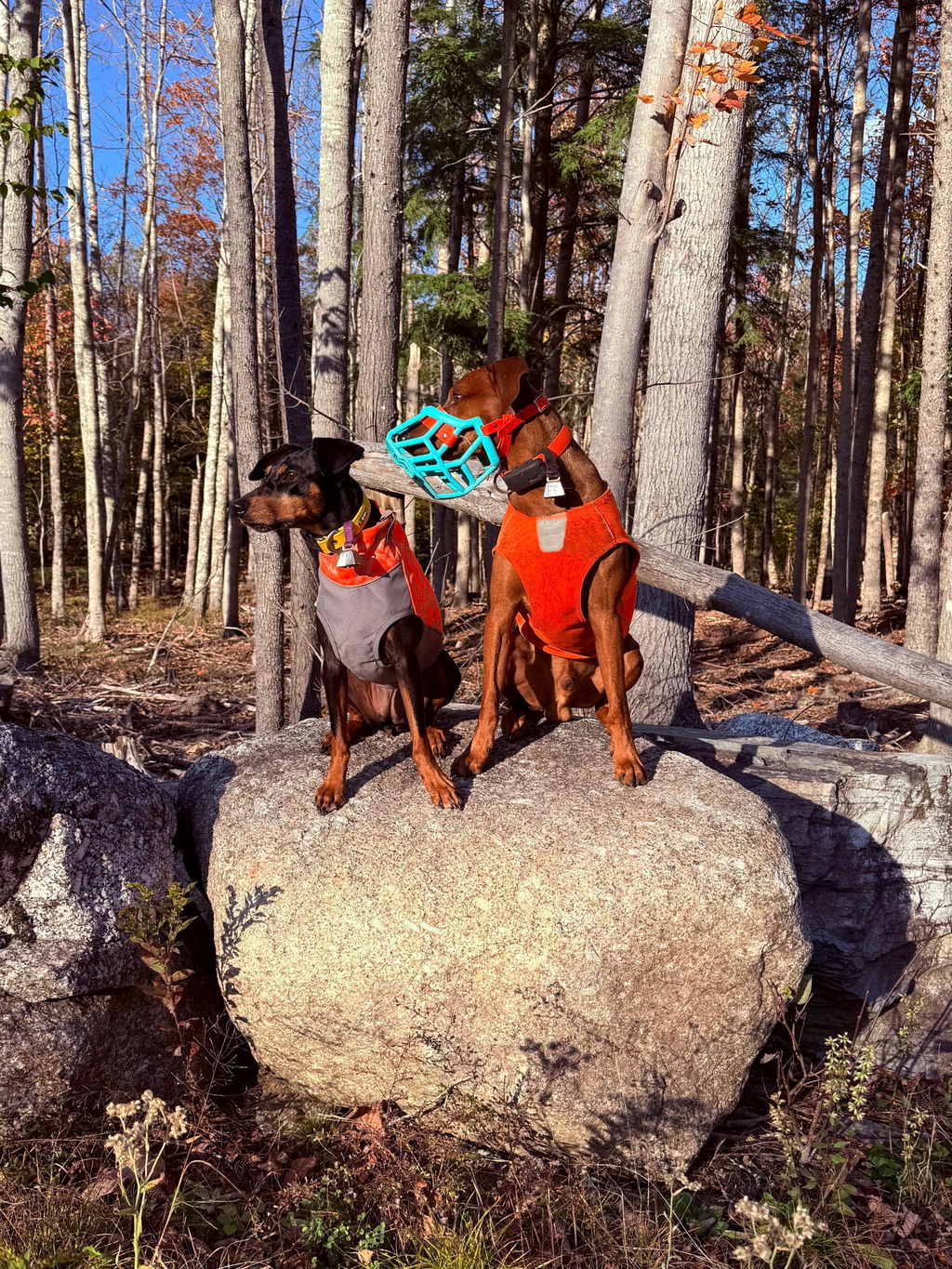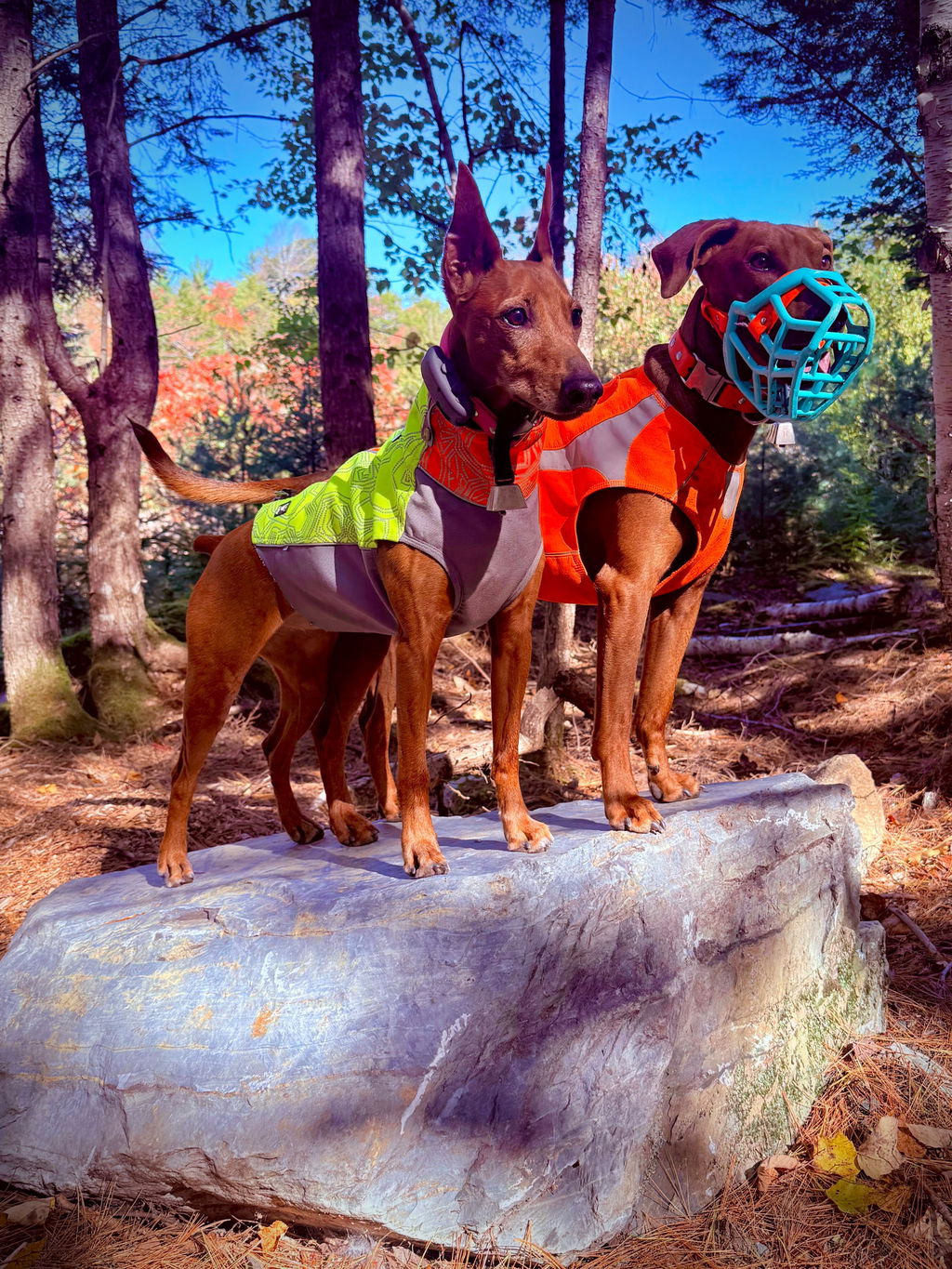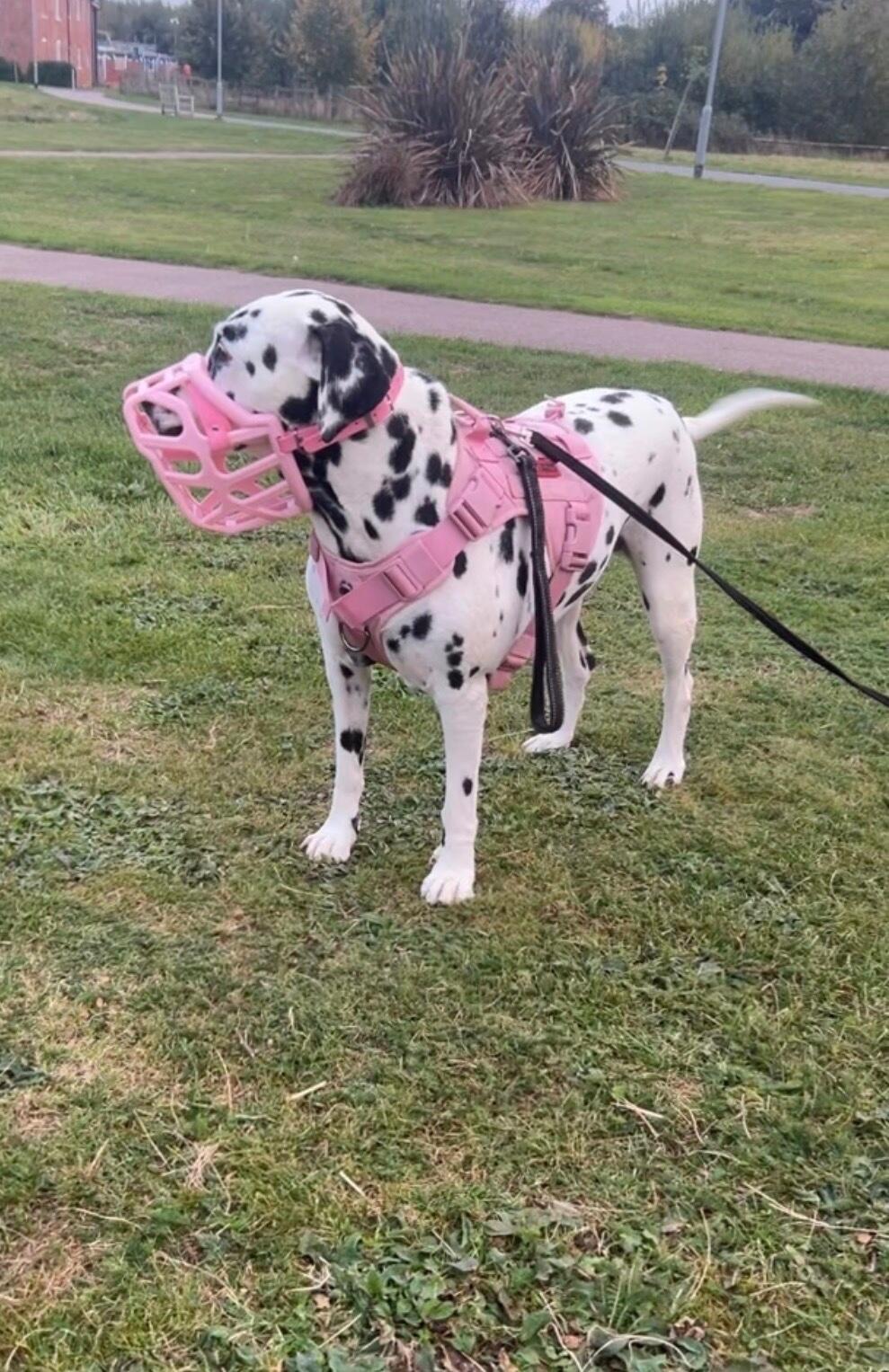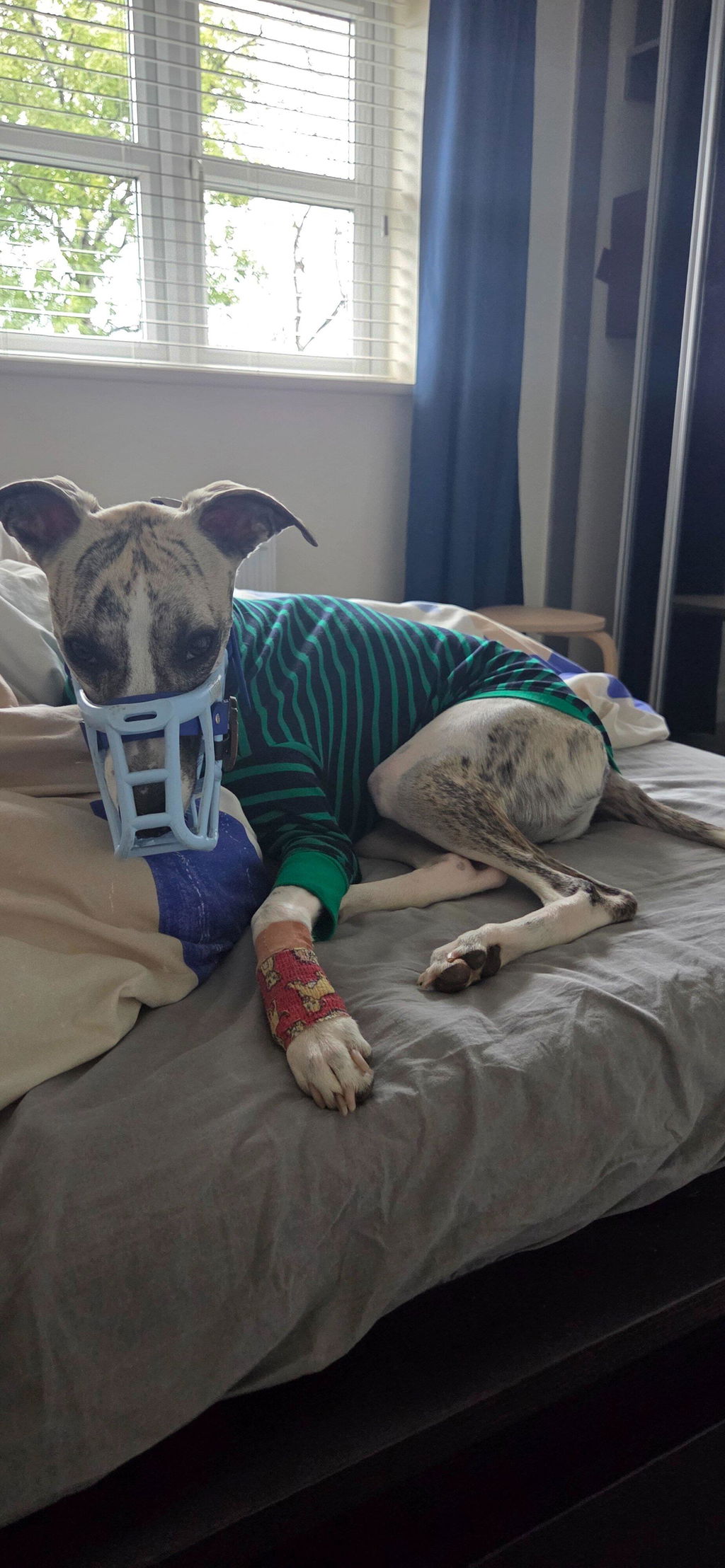


The principles of positive muzzle training remain the same regardless of a dog's size: go at the dog's pace, use positive reinforcement, and create positive associations with the muzzle.
However, small dogs often experience muzzle training differently from their larger counterparts, and making a few adjustments can significantly improve their comfort and confidence.
Whether you are introducing a muzzle for a small dog as a useful life skill, for vet visits, grooming, travel, scavenging, safety, or another reason, considering the experience from your dog's perspective can make muzzle training more comfortable and successful.

🐾 Think About Your Position
For many small dogs, a human standing over them can feel intimidating.
During muzzle training, guardians often unconsciously lean forward, reach down, or raise their hands above the dog's head to fasten the muzzle straps.

From the dog's perspective, this can feel overwhelming.
Whenever possible, position yourself at the dog's level. Sit on the floor, kneel beside them, or train while they are resting on a secure raised surface, such as a sofa, if they are comfortable there.
Whatever setup you choose, ensure the dog always has the option to move away if they need a break. For example, provide safe steps down from a raised surface.

Muzzle training should be something the dog chooses to participate in, not something they feel trapped into.
This is especially important when muzzle training small dogs, where the difference in size between the dog and the person training them can make our body position and movements particularly significant.
🐶 Bring the Muzzle to the Dog
When introducing a small dog muzzle, hold the muzzle at the dog's natural head height.
This allows them to approach and investigate the muzzle without needing to stretch or balance awkwardly.
The easier you make each repetition, the more likely your dog is to remain engaged.
Positive muzzle training is about helping your dog build confidence around the muzzle and allowing them to actively participate in the process.
🦴 Consider How You Deliver Rewards
A treat that seems tiny to a Labrador may be a substantial snack for a Chihuahua.
Because small dogs have lower daily calorie requirements, guardians can quickly find themselves delivering a significant portion of the dog's daily food allowance during muzzle training sessions.
This can lead to dogs becoming full before the session is complete and may contribute to unwanted weight gain over time.

Using very small food rewards can help.
Soft training treats can often be divided into multiple pieces, while spreads such as Primula or paste treats can be dispensed into smaller squeeze tubes or syringes for easy reinforcement.
This allows you to continue creating positive associations with the dog muzzle while being mindful of the amount of food your small dog is consuming.

💛 Be Mindful of Physical Praise
Not every dog enjoys being touched during training, and this can be particularly relevant for small dogs.
Many small dogs are accustomed to people reaching for them, picking them up, or patting them on the head without warning.
During small dog muzzle training, enthusiastic physical praise may interrupt learning or even make some dogs uncomfortable.
Pay attention to what your individual dog finds rewarding.
For some dogs, verbal praise and food rewards are more valuable than petting. Others may prefer a brief play session or the opportunity to move freely between repetitions.
The dog's response should guide your choice of reinforcement.
Positive muzzle training should always consider the preferences, comfort, and body language of the individual dog.
🐕 Fastening Muzzle Straps Can Be the Hardest Part
Owners often focus on teaching the dog to place their nose into the muzzle, only to discover that fastening the straps is where progress stalls.
For small dogs, hands moving over their head can feel particularly intrusive.
Rather than reaching suddenly over the dog's face, spend time building positive associations with gentle movements around the head and neck before attempting to secure the muzzle.
Break the process down into small steps.
Reward your dog for touching the straps, moving them behind the ears, briefly holding them together, and eventually fastening them for just a second before removing them again.
Gradually, as your dog becomes comfortable, you can build up the amount of time the muzzle remains fastened.
The goal is to make the fastening process as predictable and uneventful as possible.
Remember that learning to put their nose into a dog muzzle and being comfortable with the muzzle being fastened are different parts of the training process. Your dog may need additional time and positive reinforcement for each stage.

👀 Watch for Subtle Signs of Discomfort During Muzzle Training
Small dogs can sometimes communicate stress in ways that are easy to miss.
Rather than obvious avoidance, they may:
-
Freeze
-
Lean away slightly
-
Lower their head
-
Stop taking treats
-
Become unusually still
These behaviours can indicate that muzzle training is progressing too quickly.
Watching your dog's body language throughout each session allows you to adjust the training before they become overwhelmed.
If your dog begins showing signs of discomfort, consider making the exercise easier, returning to an earlier stage, or giving them a break.
Your dog's behaviour should determine the pace of muzzle training, rather than a predetermined training timeline.

🐾 Positive Muzzle Training for Small Dogs
Whether you're muzzle training a Chihuahua, Dachshund, Pomeranian, Terrier, Toy Poodle, or another small dog, the goal remains the same: to create positive associations with the muzzle while helping your dog feel safe, comfortable, and confident.
Small adjustments to your body position, reward delivery, physical praise, strap training, and awareness of subtle body language can make a significant difference to your dog's experience.
A muzzled dog should still be listened to.
Wearing a muzzle does not remove a dog's need for choice, space, appropriate handling, and consideration of their body language.
Muzzle training should be something your dog chooses to participate in, not something they feel trapped into.
By taking the process slowly and using positive reinforcement, you can help make wearing a muzzle a normal and predictable part of your small dog's life.
Check out our Behind the Scenes at our muzzle fitting days for helpful support.