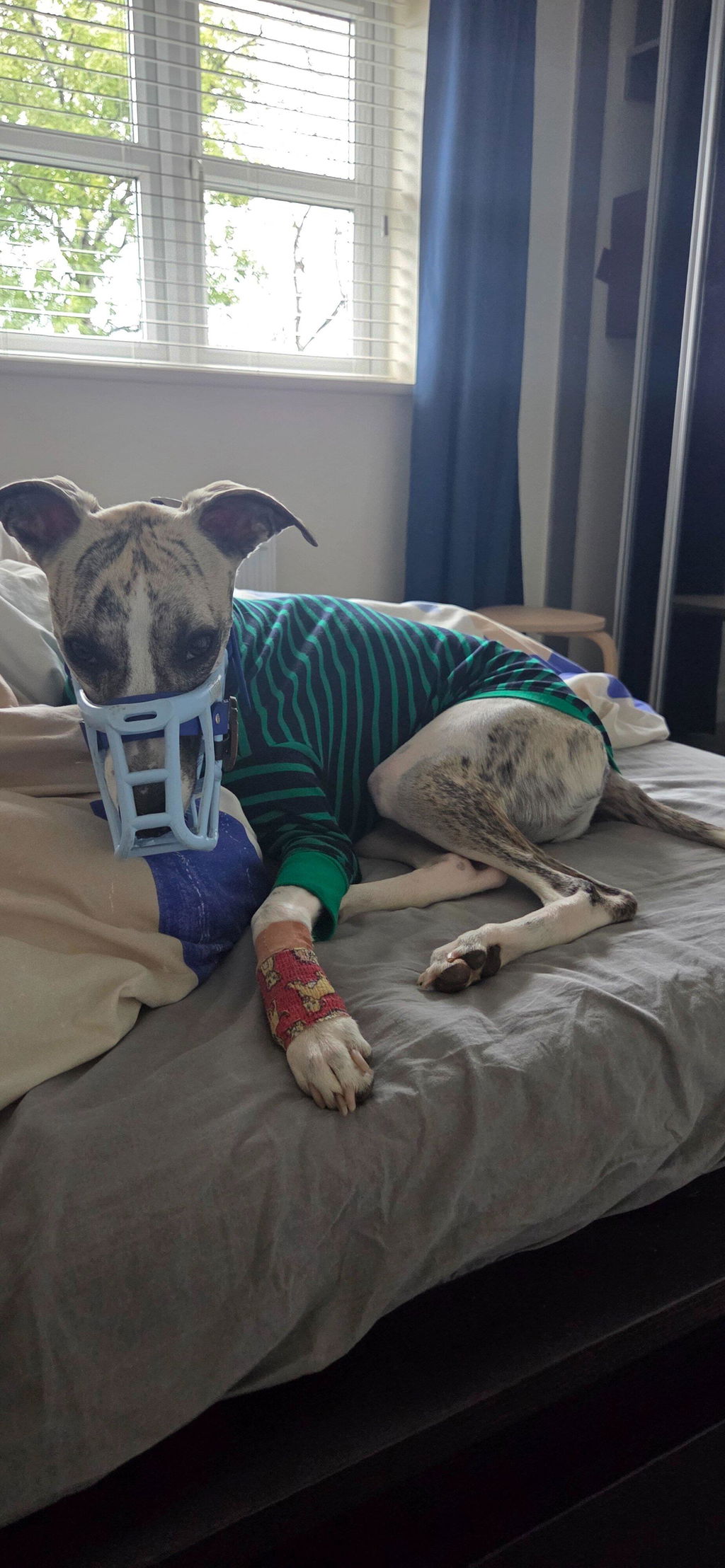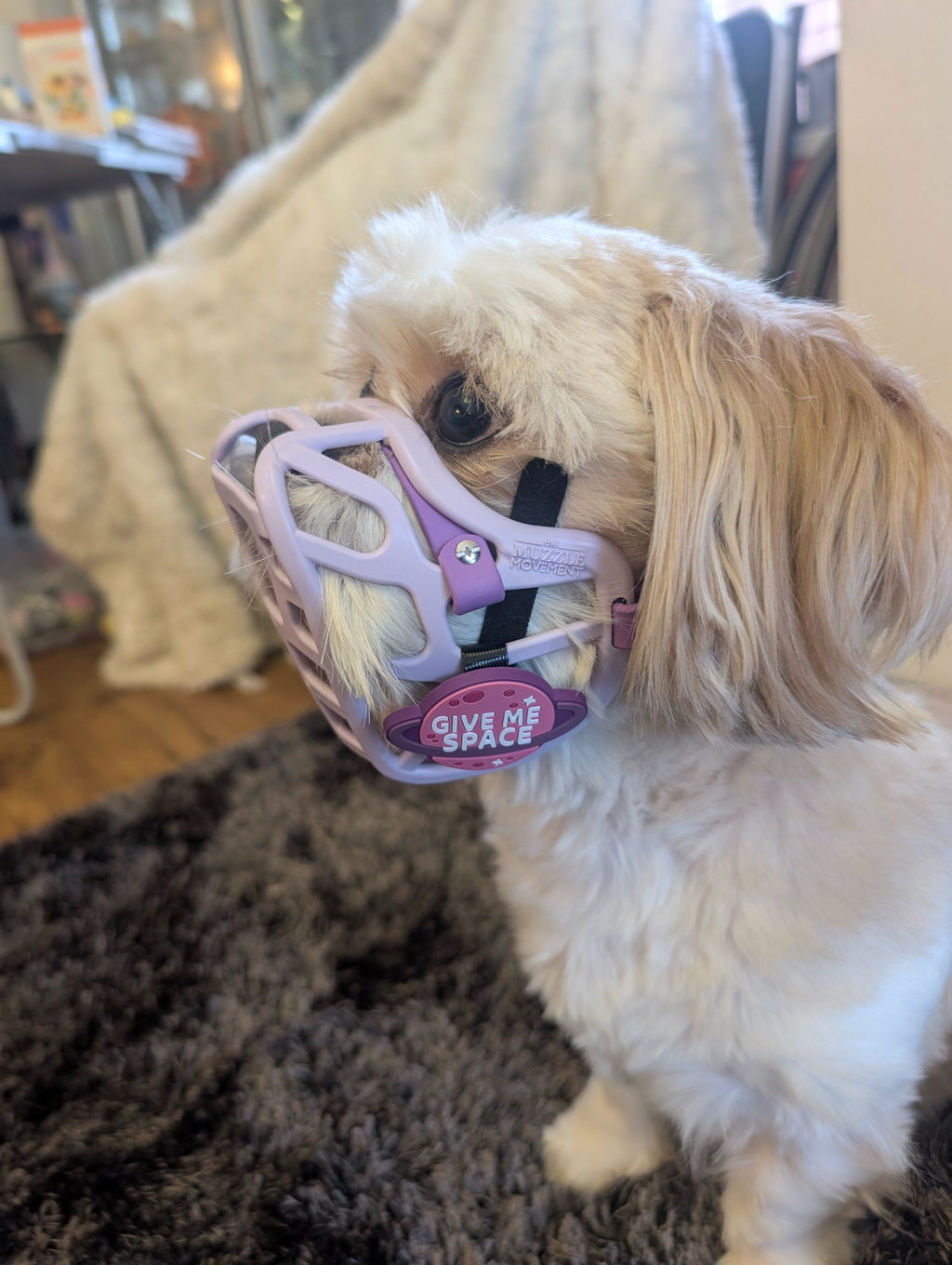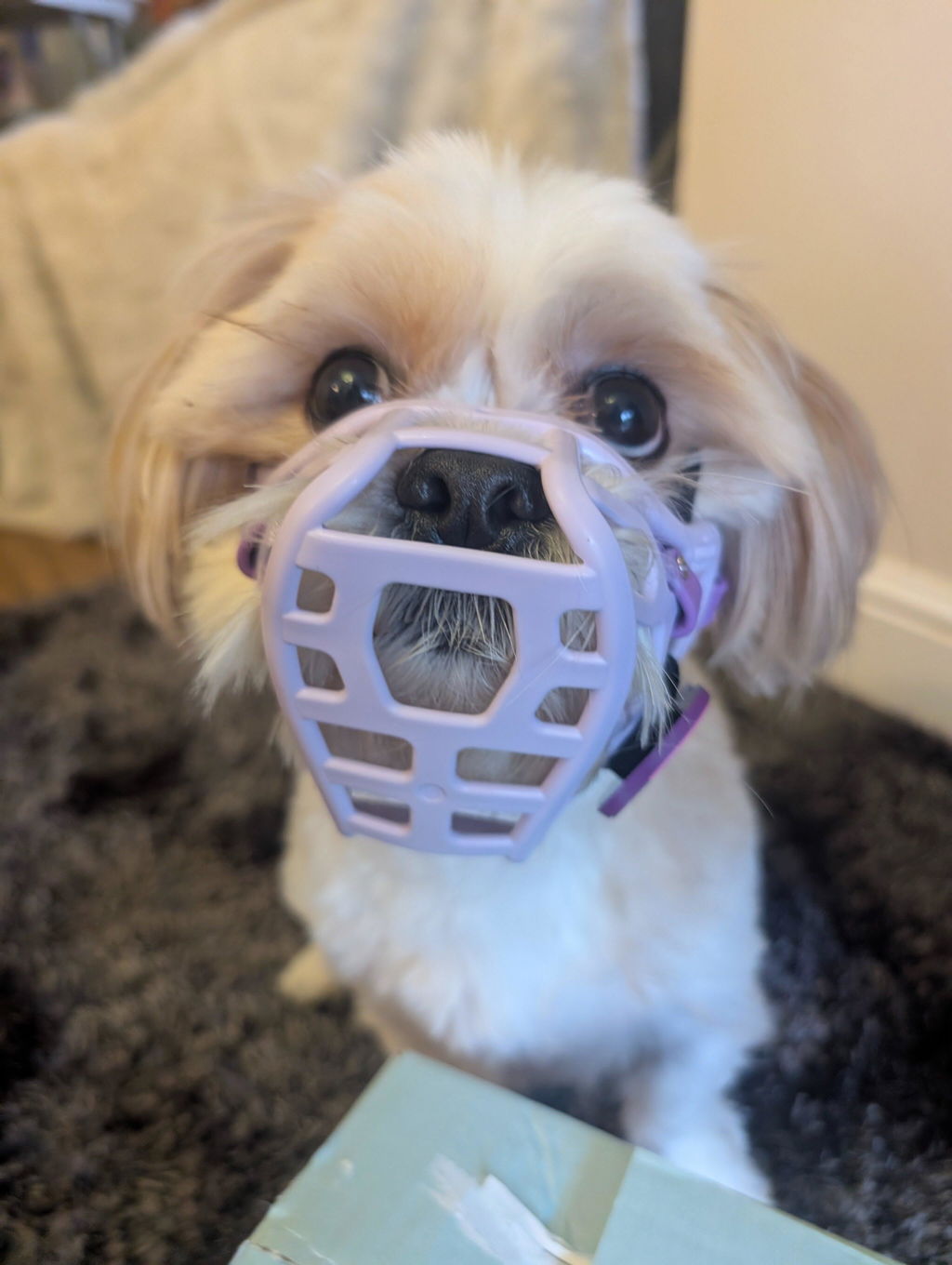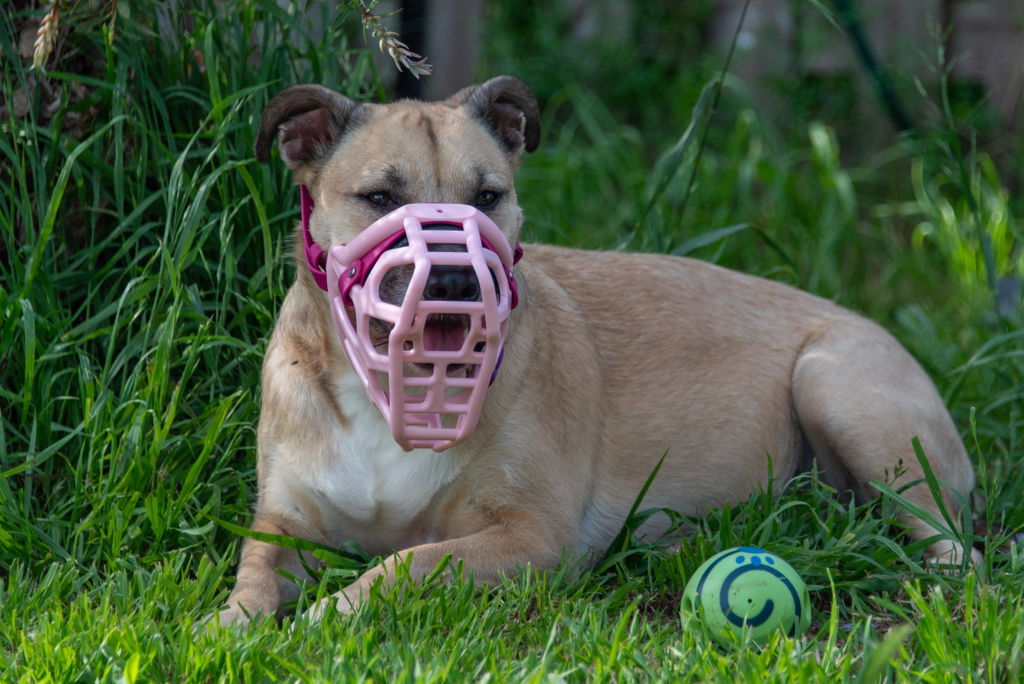


There are lots of reasons a dog might be asked to wear a muzzle at the vets.
For some dogs, it's because they've previously used aggressive behaviour during veterinary handling. They might already find examinations frightening or difficult, and their veterinary team knows that dog muzzles are needed to help keep everyone safe.

But that doesn't necessarily mean they've been muzzle trained.
For many of these dogs, the muzzle only appears when it's needed. They arrive at the vets already worried, somebody needs to examine or treat them, and an unfamiliar muzzle has to be put on so that this can happen safely. If that's the only experience they ever have of wearing one, it's easy to see how the muzzle itself can become another difficult part of going to the vets.

Positive muzzle training can change that. Instead of the muzzle being something unfamiliar that's put on during an already stressful situation, it can be their own, properly fitted piece of equipment that they've learnt to wear comfortably long before the appointment.
Then there are dogs at the other end of the spectrum: those who currently love going to the vets, happily take treats from the veterinary team and have never shown any concern about being examined. We think muzzle training is a useful canine training life skill for them too.
The important point isn't whether your dog uses aggressive behaviour now. It's that any dog may find themselves in a situation where wearing a muzzle would be useful, and we have an opportunity to prepare them for that before the situation arises.

A dog who already struggles with veterinary handling benefits from learning that a muzzle doesn't have to be another frightening part of their appointment. A dog who currently loves the vets benefits from having the skill there in case injury, illness, pain or a frightening experience changes how they feel in the future.
Hopefully, there will never be an occasion when your dog urgently needs to wear their muzzle. But if there is, having that training already in place means we're not asking them to cope with something completely unfamiliar at a time when they may already be frightened, unwell or in pain.

Why Train for Something My Dog Might Never Need?
For a dog who already finds the vets difficult, the reason might be obvious: we're trying to make something they may regularly need as familiar and comfortable as possible.
For everyone else, it's easy to think, "I'll muzzle train if we ever need to." The difficulty is that the first time you need a muzzle isn't always something you can plan for.
Your dog could injure themselves and need an uncomfortable examination. They could develop an ear or eye problem that makes being touched around their head painful. They could develop arthritis, dental pain or another condition that changes how comfortable they are with handling. A dog who has happily visited the same vet for years can also have one painful or frightening experience that changes how they feel about future visits.
We aren't suggesting that every dog will eventually bite. We are acknowledging that pain, fear and stress can affect behaviour, and that a dog who would usually be perfectly comfortable being examined may have very different boundaries when something hurts.

This is why we think muzzle training makes sense before there's a problem or, if there already is a problem, before the next time the muzzle is needed.
Whether your dog has worn an unfamiliar practice muzzle ten times or has never seen a muzzle in their life, we can give them a better experience going forward.

We can teach them what their muzzle is. We can make sure it fits them properly. We can introduce it gradually and positively, practise wearing it away from the vets, and make sure it doesn't only appear immediately before something difficult happens.
Then, if the veterinary team does need your dog to wear one, the situation itself may still be stressful, but the muzzle doesn't have to add to it.
Bringing Your Dog's Own Muzzle to the Vets
There is another very practical benefit to preventative muzzle training: your dog can have their own muzzle, chosen and fitted specifically for them.
Veterinary practices need to have equipment available for lots of different dogs, which means the muzzle offered in an unexpected situation may not necessarily be the best fit for your individual dog.
A well-fitting basket dog muzzle should be comfortable and secure while providing enough space for the dog to open their mouth and pant appropriately.
If your dog already has a suitable dog muzzle, you can bring it along to appointments. If the veterinary team decides they'd feel more comfortable examining your dog with a muzzle on, you've got something that fits properly and, just as importantly, something your dog already knows.

It Can Make a Difference for the Veterinary Team Too
Veterinary professionals need to be able to do their jobs safely, and that's an important part of this conversation.
Even if your dog has never used aggressive behaviour before, the veterinary professional examining them doesn't necessarily know how they're going to respond when a painful area is touched. A familiar, comfortably worn muzzle can provide an additional layer of safety and may help everyone feel more confident about proceeding with necessary care.
That doesn't mean a muzzle should ever be used as permission to ignore what a dog is communicating.

A muzzled dog can still be frightened, overwhelmed and asking for something to stop.
The UK's Royal College of Veterinary Surgeons (RCVS) specifically includes recognising and minimising fear and distress within its essential handling skills for veterinary nurses. Its guidance calls for restraint to be appropriate to the individual patient and situation, with consideration for the animal's emotional wellbeing.²
This is an important distinction. A muzzle is a safety and management tool; it isn't a replacement for thoughtful handling. There will be times when a dog needs a break, a different approach, pain relief, pre-visit medication or sedation. Sometimes the best plan will involve a combination of these things alongside a muzzle.
Research into lower-stress, collaborative veterinary handling supports this wider approach too, with dogs involved in collaborative examinations showing a greater reduction in physiological measures of stress over repeated visits than dogs receiving routine care.³

What If My Dog Already Struggles at the Vets?
For dogs who already use aggressive behaviour during veterinary visits, being comfortable and confident in their own muzzle can be particularly valuable.
If the only time a muzzle appears is immediately before something the dog finds frightening or painful, it's very easy for the muzzle itself to become part of that negative association. That's why we don't want dogs to only wear their muzzle when it's "needed."

Once your dog is comfortable wearing one, make it part of ordinary life. They can wear it on walks, during canine training sessions or while doing something they enjoy. Give them treats through it and let them experience plenty of occasions where they wear their muzzle and nothing particularly interesting happens at all.
Ideally, seeing their muzzle shouldn't tell your dog that something unpleasant is about to happen.

The same principle can be applied to the veterinary practice. Speak to your practice and see what they are happy for you to do. Some may be happy for you to spend a couple of minutes in reception doing some training, or let your dog pop in wearing their muzzle, have some treats and leave again without anything medical happening.
If your dog already finds veterinary visits very difficult, however, we'd recommend discussing this with your veterinary team and making a plan that's appropriate for them rather than repeatedly taking them into an environment they find frightening.
Think About the Dog You'll Be Taking to the Vets in Five or Ten Years
One of the biggest reasons we're so passionate about preventative muzzle training is that the dog you have today isn't necessarily the dog you'll be taking to the vets later in their life.
A young, healthy dog who is perfectly comfortable being examined may eventually develop arthritis, dental disease, cancer, eye problems, neurological conditions or any number of other conditions that involve pain, discomfort or repeated treatment.
As dogs get older, there can also be changes to their mobility, hearing, vision and cognition that affect how they experience handling and veterinary care. This doesn't mean we need to worry about all the things that might happen to our dogs in the future. It simply means we have an opportunity to give them useful skills while they're happy and healthy enough to learn them.

It's much easier to introduce a muzzle gradually at home, with plenty of rewards and no urgency, than it is to begin after a diagnosis when your dog may already be uncomfortable and facing repeated veterinary visits.
A diagnosis can also be a good prompt to start. If your dog develops an ongoing condition that is likely to involve regular examinations, treatment or uncomfortable handling and they aren't already muzzle trained, consider whether now might be a good time to introduce one, providing they're well enough to train.

Veterinary Care Can Involve a Lot More Than One Examination
Dogs managing injuries or ongoing conditions may experience much more handling than an occasional consultation with their vet.
There might be physiotherapy, hydrotherapy, blood tests, dressing changes, injections, imaging, repeated examinations or hospital stays. Your dog may also need to be handled by several different people as part of their care.

That doesn't mean they need to wear a muzzle for all of those things. They may never need it at all, but having a dog who is already comfortable wearing one means there's another option available if their feelings about being handled change.

Dog Muzzles Can Have Other Uses in Veterinary Care Too
We're also seeing veterinary professionals finding other practical uses for The Muzzle Movement muzzle within clinical settings.
The treat hole incorporated into our muzzle, for example, is being used by veterinary professionals when managing dogs during extubation as they come round from anaesthesia. Recovery can be a time when responses are less predictable, and vets are finding the muzzle useful as an additional way of managing bite risk and helping to keep staff safe.
There may also be circumstances where a suitable muzzle can help prevent a dog from interfering with a wound after surgery. Many dogs cope perfectly well with a traditional cone or buster collar, but others find them uncomfortable or frightening. Depending on the dog, the procedure and the location of the wound, a muzzle may sometimes offer another option to reduce wound interference.

Dog muzzles can have other health-related benefits too. Dogs who scavenge, for example, can be prevented from picking up and eating things they shouldn't, which may become particularly important for a dog who needs a carefully controlled diet because of a medical condition.
It's all part of the same bigger picture: muzzles aren't only about bites.
So, Where Do You Start With Muzzle Training?
First, choose a suitable, well-fitting muzzle. Your dog needs enough room to open their mouth and pant properly, and the muzzle should be comfortable and secure for their individual face. READ MORE

Rather than simply putting the muzzle on and waiting for your dog to "get used to it," we want to build a genuinely positive association with wearing it as part of their wider canine training. Start gradually, reward interaction with the muzzle and work towards your dog happily putting their own nose inside. Only then do we begin building up fastening and wearing time. READ MORE
There's no rush. The whole advantage of preventative training is that we're doing it when we don't urgently need the end result.

Once your dog is comfortable wearing their muzzle, don't pack it away until something goes wrong. Keep using it occasionally during normal, enjoyable parts of life so it remains familiar, and don't forget the vets. If your dog is already comfortable at your practice, you could practise having them wear their muzzle for an ordinary appointment or ask whether you can pop in for a short positive visit.
Hopefully, Your Dog Will Never Need It
Muzzle training isn't about expecting our dogs to use aggressive behaviour but is about accepting that we can't predict every situation they'll find themselves in throughout their lives.
We teach recall without expecting our dogs to run towards danger. We get them used to having their paws, ears and mouths handled because one day somebody might need to examine them. We teach them to travel, to wear a harness and to cope with all sorts of other things that make navigating a human world a little easier. We think being comfortable wearing dog muzzles belongs on that list of essential canine training skills.

Your dog may go their entire life without needing one for veterinary treatment. If they do, the training hasn't been wasted; they've simply learnt another skill.
But if one day they're injured, develop a painful condition, begin struggling with veterinary handling or need to be muzzled for a particular procedure, you won't have to introduce something completely unfamiliar at the same time.
You'll be able to reach for their own familiar, properly fitted muzzle and remove one potential source of stress from an already difficult situation.

A muzzle can only do its job. and be comfortable,if it fits properly. Measure your dog then take our quick sizing quiz to find the right fit for your dog before you start training.
TAKE THE SIZING QUIZ
Small dogs are easy to carry, lift and hold still — but that doesn't mean they're comfortable. Discover why small breeds deserve the same muzzle training as larger dogs.
READ MORE
A well-fitting basket muzzle should be secure, comfortable and allow your dog to pant freely. Here's what to look for before you start training.
READ MORE



1. Edwards, P.T. et al. (2019). Investigating risk factors that predict a dog's fear during veterinary consultations. PLOS ONE, 14(7), e0215416. The study analysed responses relating to 26,555 dogs and found veterinary fear to be common, with previous negative veterinary experiences among the factors associated with fear.
2. Royal College of Veterinary Surgeons (RCVS). Day One Skills for Veterinary Nurses – Small Animal. The RCVS includes recognition and minimisation of fear and distress, stress-reducing approaches and selection of restraint appropriate to the individual patient and situation within its handling and restraint requirements.
3. Stellato, A.C. et al. (2023). Effects of Changing Veterinary Handling Techniques on Canine Behaviour and Physiology Part 1: Physiological Measurements. Animals. Dogs participating in adaptive, collaborative examinations and procedures intended to minimise fear showed a greater reduction in stress measures over time than those receiving routine care.